Recognise thermal variation.
Observe changing conditions and investigate deviations in a defined measurement setup.
EARLIER AWARENESSTemperature insight for the processes
where every detail matters.
900–1700nm
A near-infrared view of thermal radiation.1nm-class
Resolve finer spectral detail.≤50ms
Observe changing thermal conditions.0.01°C
Fine temperature discrimination.**Resolution is not measurement accuracy. Performance depends on the material, optics, measurement conditions and calibration.
From a delicate wafer to a demanding thermal cycle, make temperature part of the engineering conversation.
Understand thermal variation without contacting a delicate wafer surface.
Observe thermal cycles and support more informed process adjustments.
Application setup: account for surface properties, optical access and reference calibration.
Thermal radiation carries information across wavelengths. Spectral measurement brings that detail into view, helping you investigate the temperature behaviour of a material.
Observe without contactKeep the sensing method off the target surface.
Explore programmable wavebandsConfigure the spectral view for the measurement task.
Calibrate for the real processRelate the signal to material and setup conditions.
Principle illustration · The curve is conceptual, not measured data or a temperature calculation.
A clearer thermal view can support better decisions, from early development to repeatable process studies.
Define your measurement taskObserve changing conditions and investigate deviations in a defined measurement setup.
EARLIER AWARENESSCompare thermal behaviour across trials to support process development and informed tuning.
BETTER-INFORMED DECISIONSUse calibrated observations to study repeatability and investigate sources of process variation.
MORE RIGOROUS MANUFACTURINGResults depend on the process, calibration and integration. No fixed improvement in yield, energy use or cost is implied.
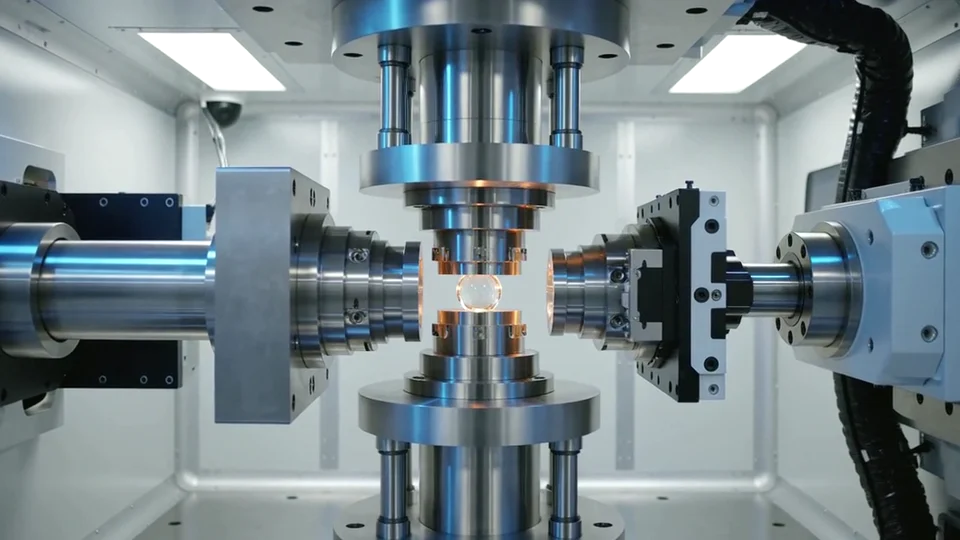
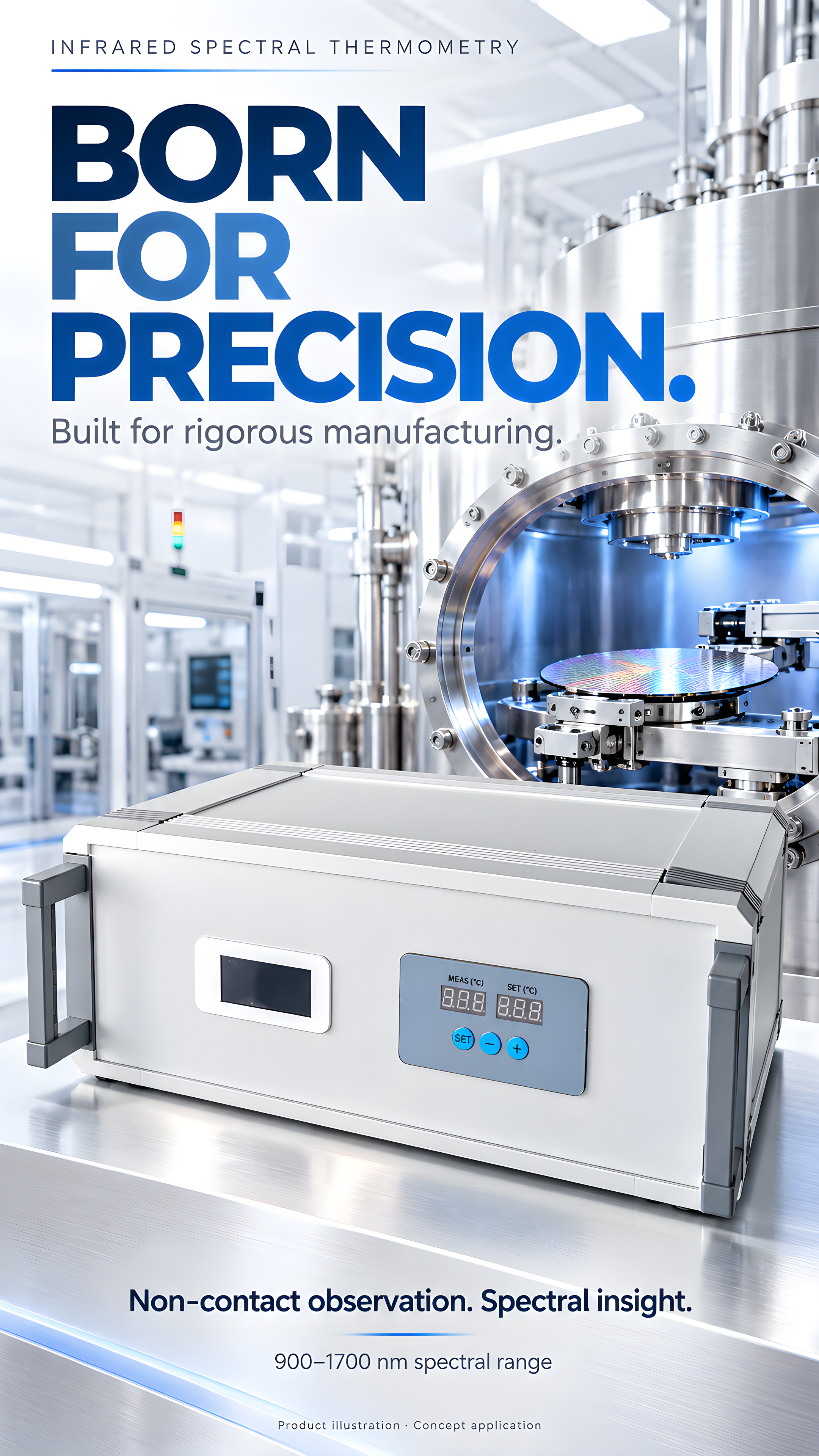
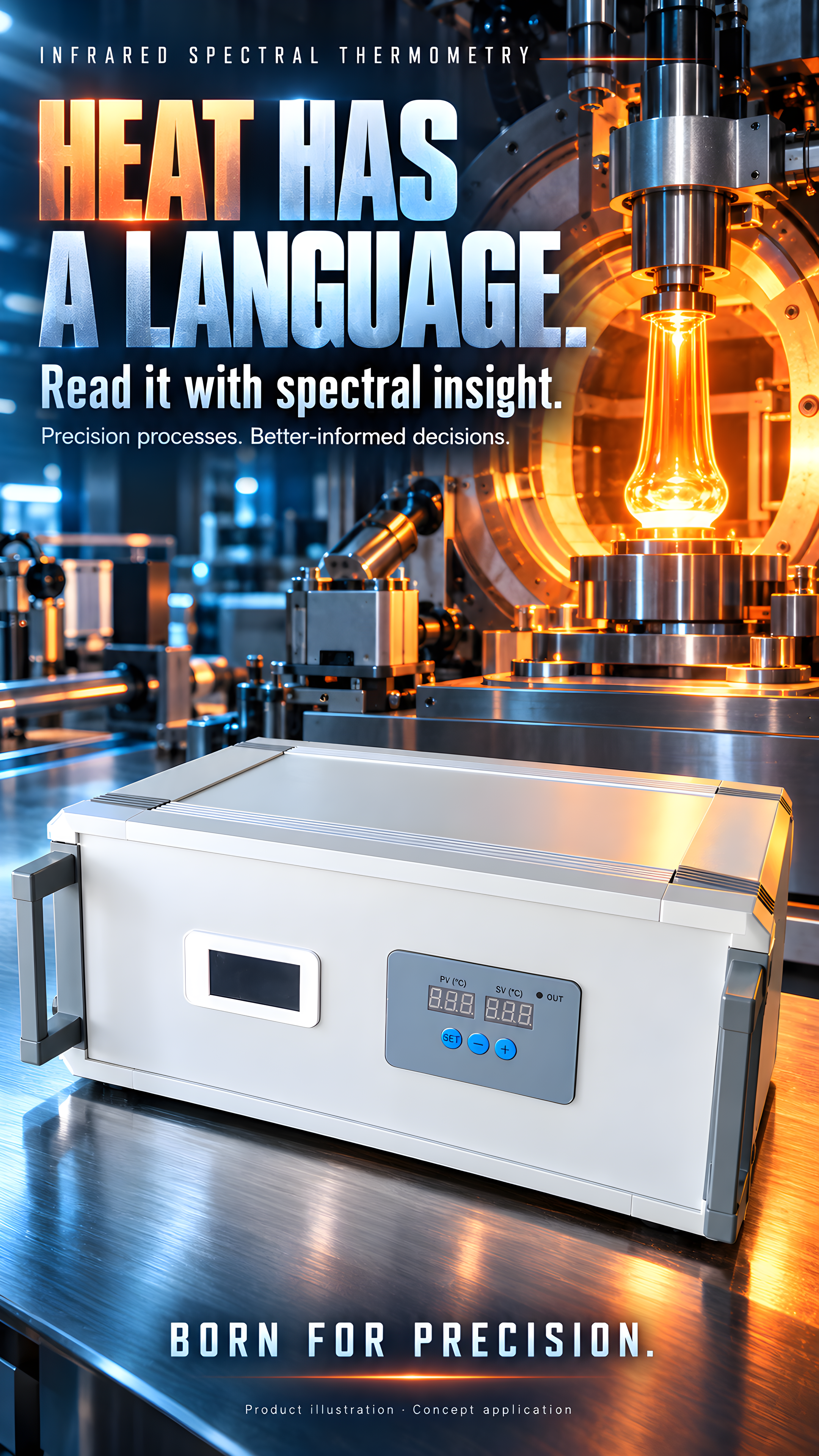
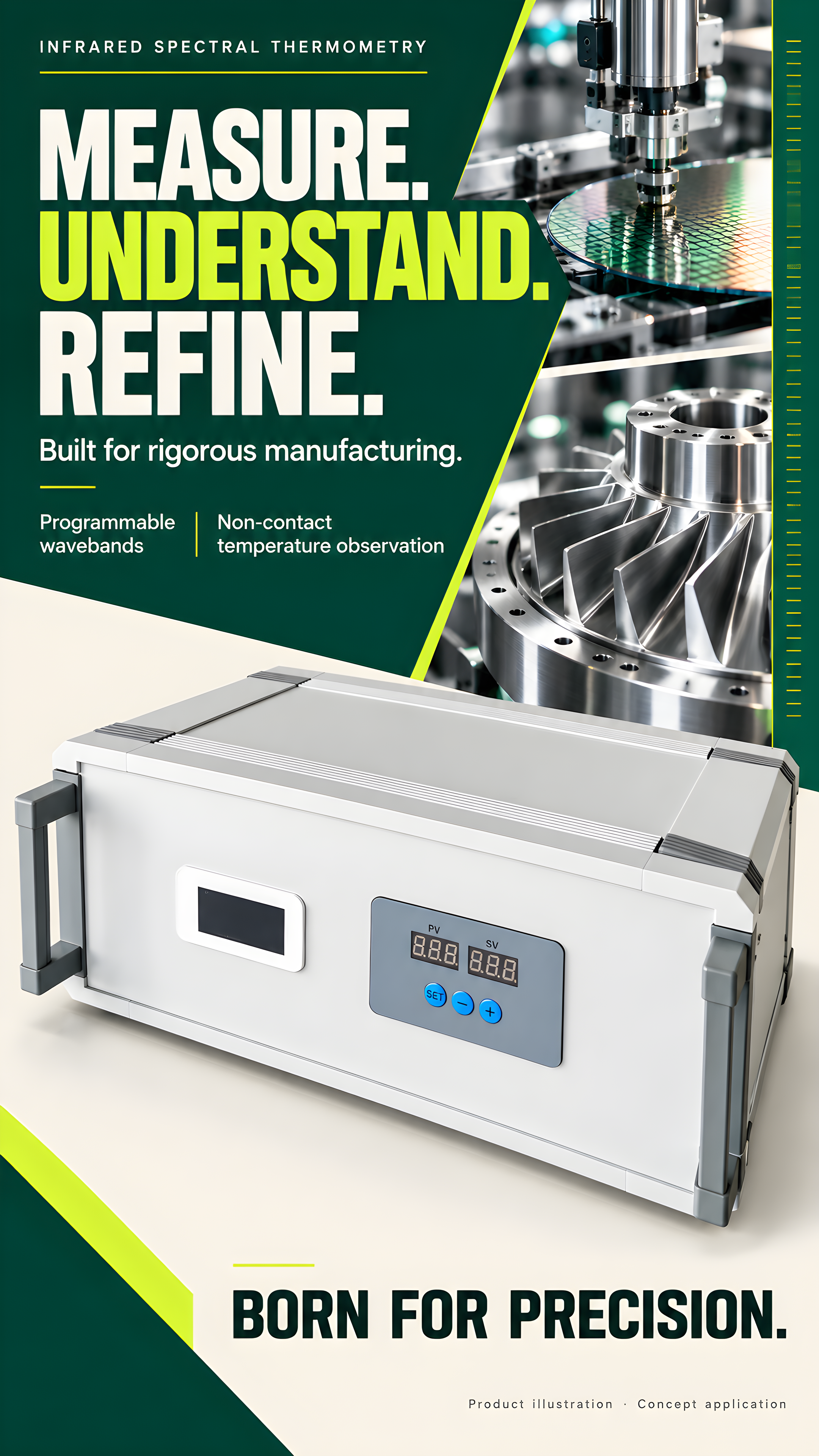
Three visual perspectives on the same idea.
Explore and download the 4K campaign posters.
Define the material, thermal conditions and optical access.
Build a brief for your technical discussion.